
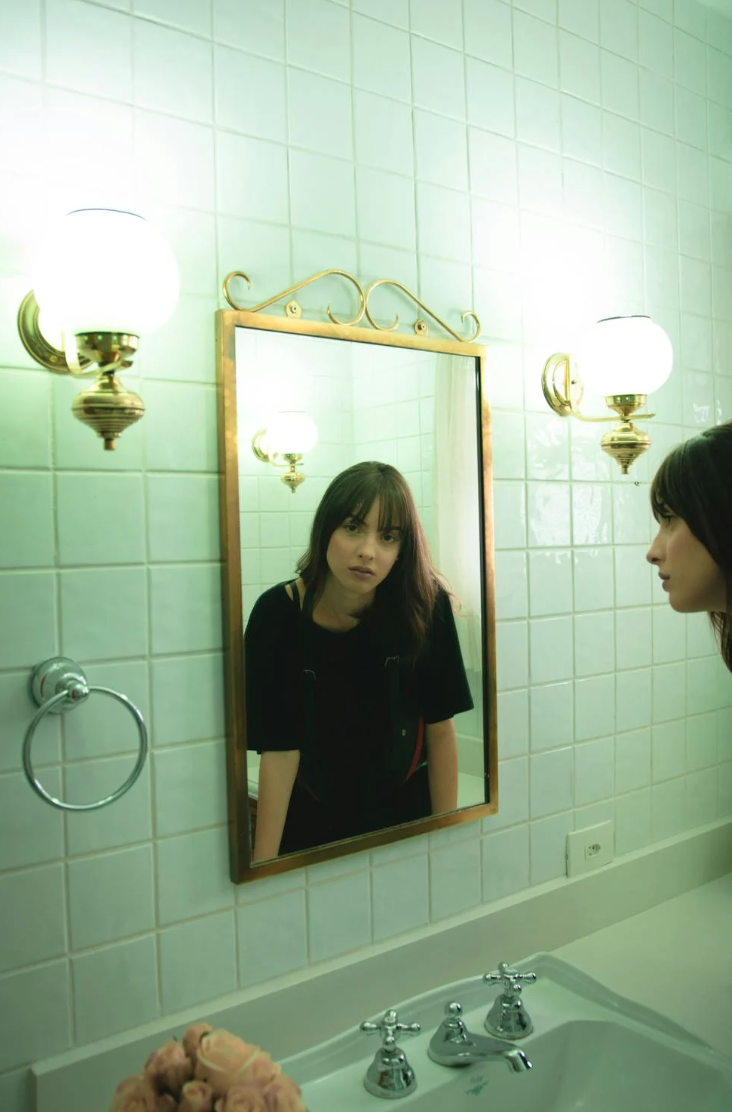
At Mendocino High School, students often fill their time seeking dopamine-like pleasure. One common issue that doesn’t get enough attention is the effects social media plays on the fixation teenagers put on their appearance. As a young woman who is also struggling with this issue, I decided to interview multiple high school students to get feedback and different opinions on how this interferes with their confidence, daily life, and learning. I found that the focal point of appearance does affect and pull from the energy that could be put into schoolwork and has effects on mental health as well.
Teenager fixation with appearance is directly linked to social media exposure. Studies show a consistent link between fixation on appearance and depression and mood disorders. The body ideals being conveyed through social media are usually unattainable and create body dysmorphia, as well as mood disorders and eating disorders. With the amount of internet usage we are allowing teenagers to have access to, it should not be hard to believe that most struggle with self-esteem.
Very few boys agreed to be interviewed for this article. Most cited that they simply don’t focus on their appearance much. That’s debatable; however there could be some stigma that boys feel around being open about caring about their appearance. Some girls said they often make small adjustments like brushing hair, fixing clothes, or putting on makeup. I find that our attention can get lost without warning, something that triggers a movement that needs fixing. One girl says “If anything, when it comes to my appearance, it’s usually my hair, I’m usually fiddling with it because it’s always giving me sensory issues on my neck. So Im constantly putting it up, but then I get self conscious by how it looks.” This quote demonstrates the distraction level of having long hair and feeling the need to have it down instead of throwing it up into a messy bun.
Social media is one of the biggest influences in a teenager’s life. The majority of teens scroll on social media for hours a day, exposing them to unrealistic beauty standards, which creates body dysmorphia, eating disorders, and depression. Experts have found that teenagers shouldn’t be on their screens for over two hours a day because higher usage is shown to lead to higher risk of depression and anxiety. After looking at my screentime I found it’s barely ever under two hours. I then decided to interview multiple students on their screen time, which I found most are on their phones over 5 hours each day.
In my experiment, I observed that the younger grades appear to be more impressionable and therefore tend to dress and act in a similar manner because they are trying to follow social norms and what may be “on trend” or “make their appearance more desirable.” This result of this behavior pulls focus from schooling and can lead to barriers to learning.
At the end of the day, the psychology around social acceptance and fitting in can lead students to put their attention on behaviors that exacerbate the problem, such as applying makeup and grooming habits. This tends to be exacerbated by social media, where most teens spend all their free time. This can contribute to a larger problem resulting in poor grades and low self-esteem. While many students worry about how they look while they’re in class, the irony of this situation is that most people may not realize that 99% of the things they worry about the most others don’t even think about taking note of, because their focus is solely on themselves. This is the psychology of the spotlight effect, which circulates the idea that people think everyone’s main focus is on them.
Comments: no replies